Plus.ai
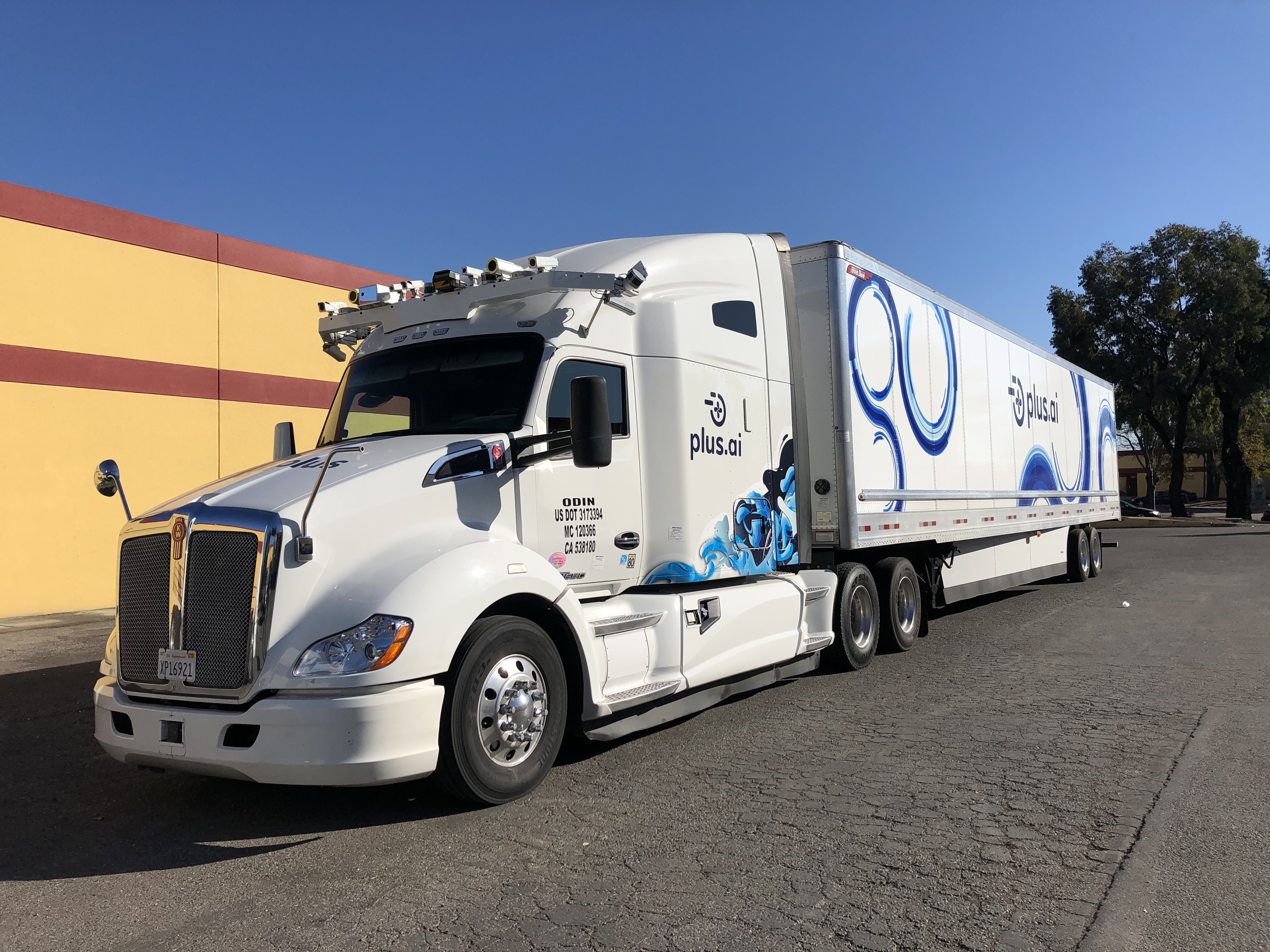
Plus.ai is shaping the freight truck industry with its artificial intelligence technology. Their self-driving trucks provide driver safety and 25% fuel savings with their best-in-class Level 4 autonomous driving system.
Goal
Plus.ai needed an interface design that accomplished three goals:
- Communicate operative functions clearly while retaining driver focus on the road.
Account for driver usability, behavior, and pain points.
- Represent a refined engineering product and brand.
Discovery
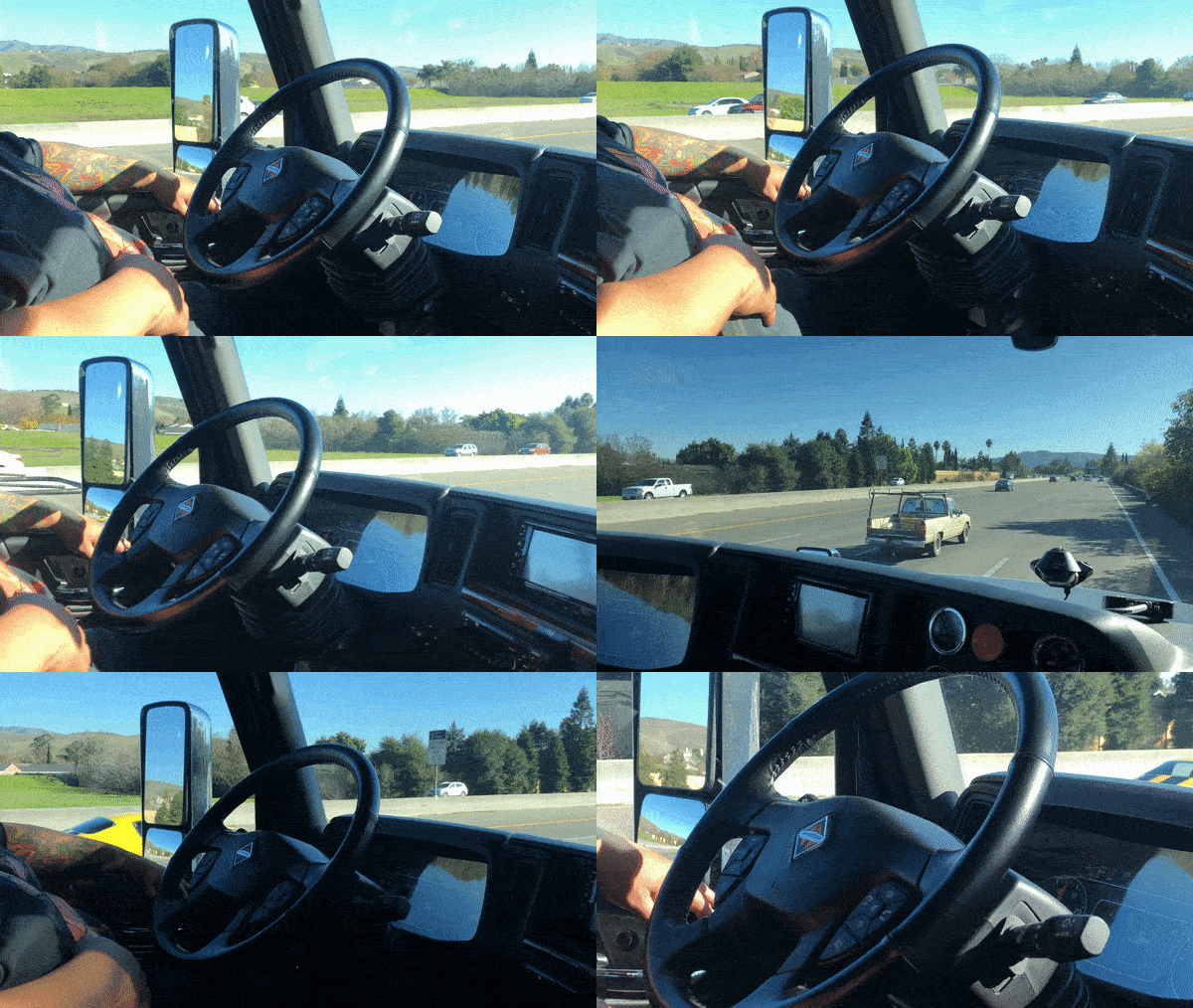
Interviews
Engineers - I interviewed the lead engineer to learn the product's capability, requirements, and boundaries.
Truck driver - I participated in a test-drive with Plus.ai's truck driver to observe behaviors and pain points.
Pain points
Limited attention - Driver must keep eyes on the road for safety. They can only glance at the screen momentarily.
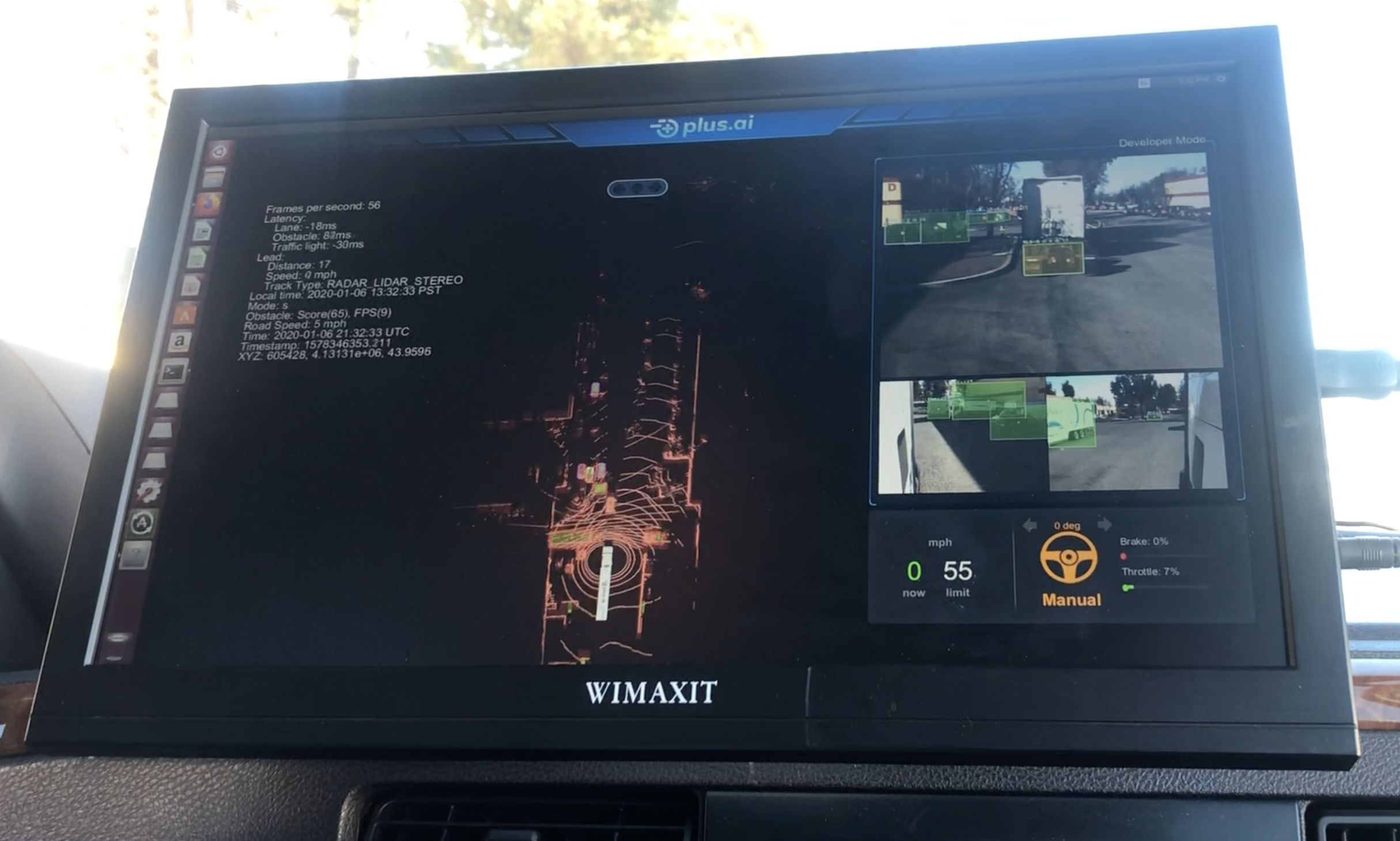
Driver peripherals - Legacy dashboard was optimized for engineering and testing purposes, not driver peripherals.
Eye fatigue - Bright lights caused eye fatigue in low light conditions.
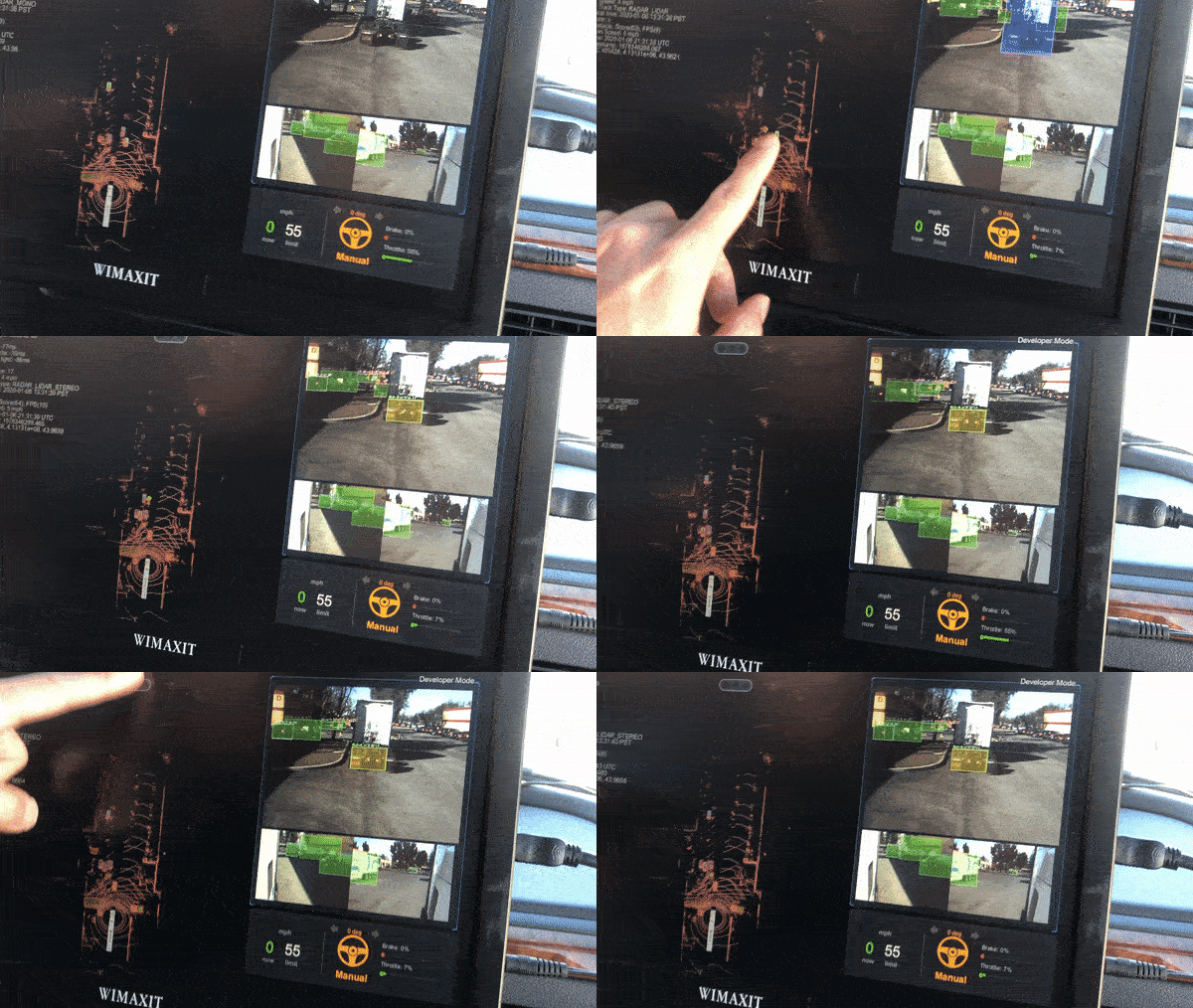
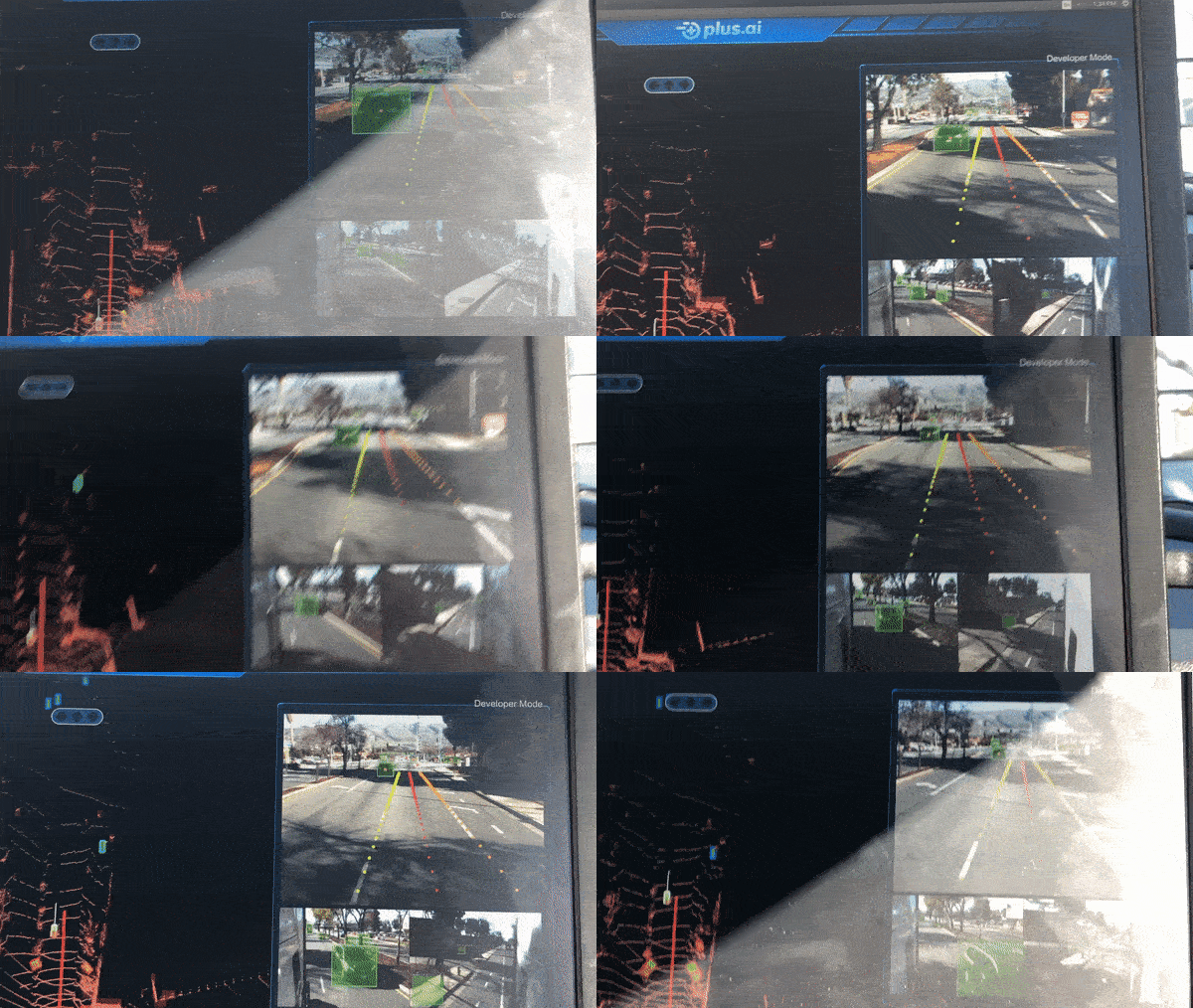
Behaviors
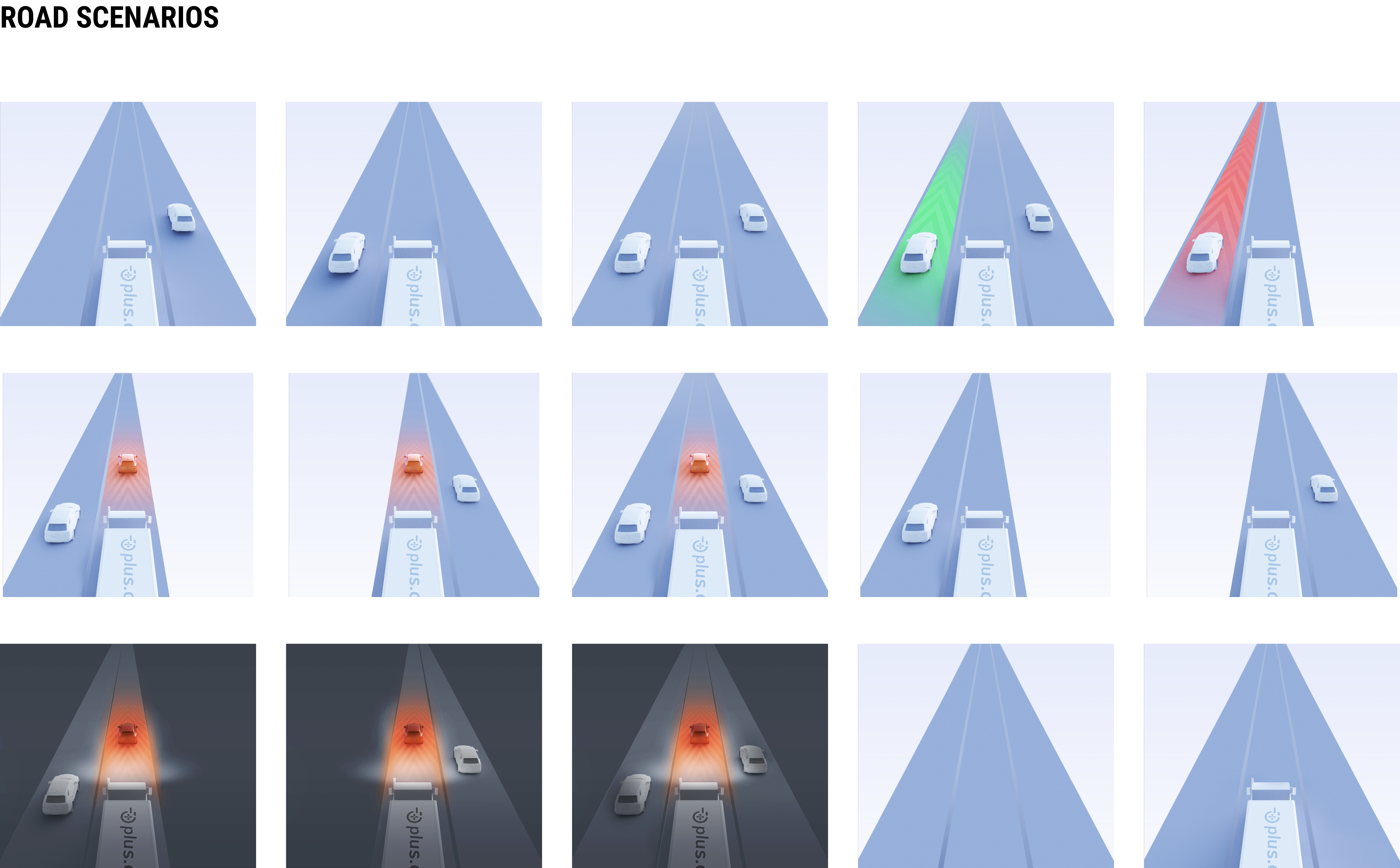
I observed driver behaviors to associate functions with scenarios.
- Manual engagement - AI is most reliable in open highways.
- Road topology - System sensitivity to road configurations.
- AI disengagement - Driver can override AI for safety.
Design
Content
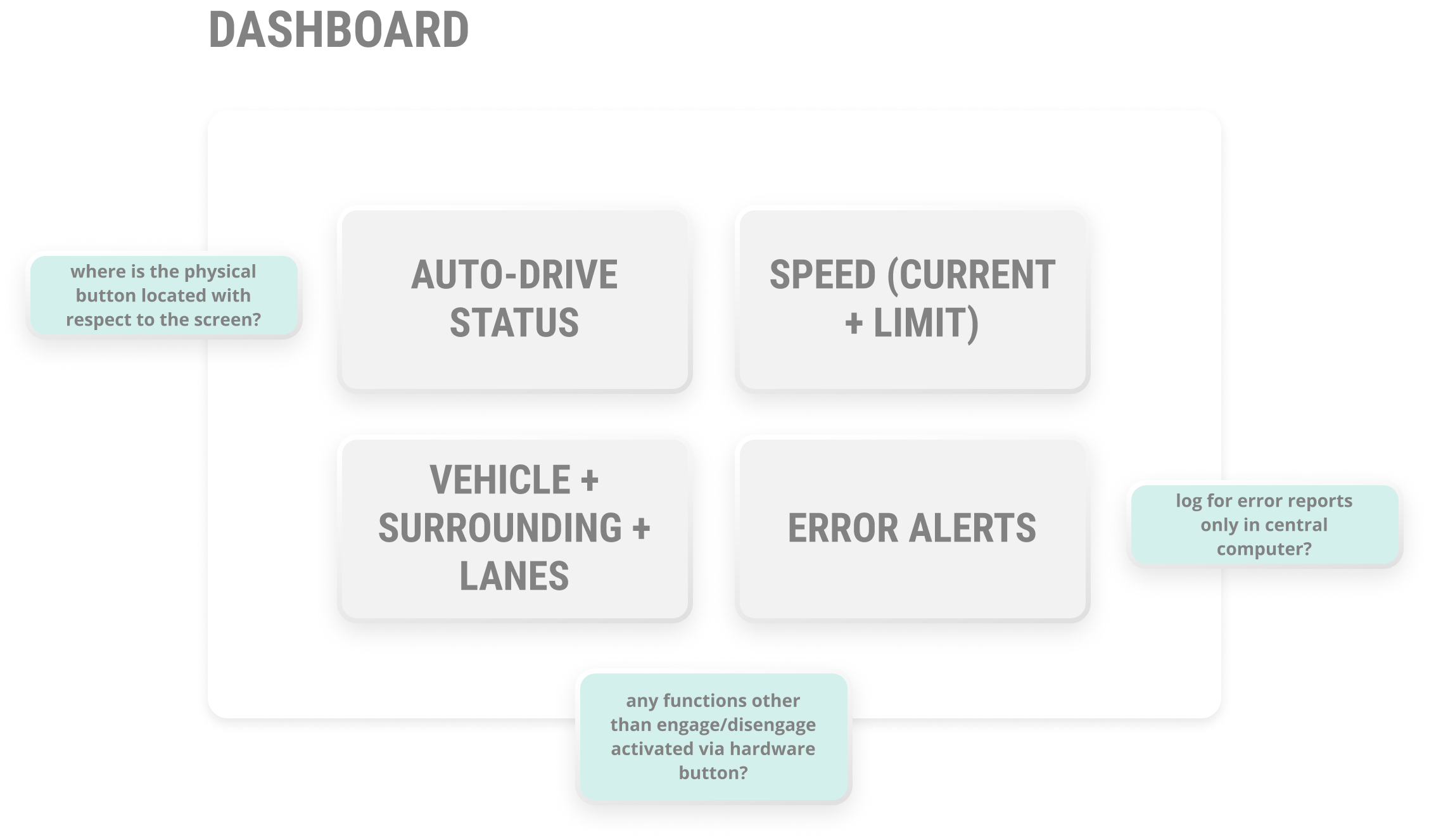
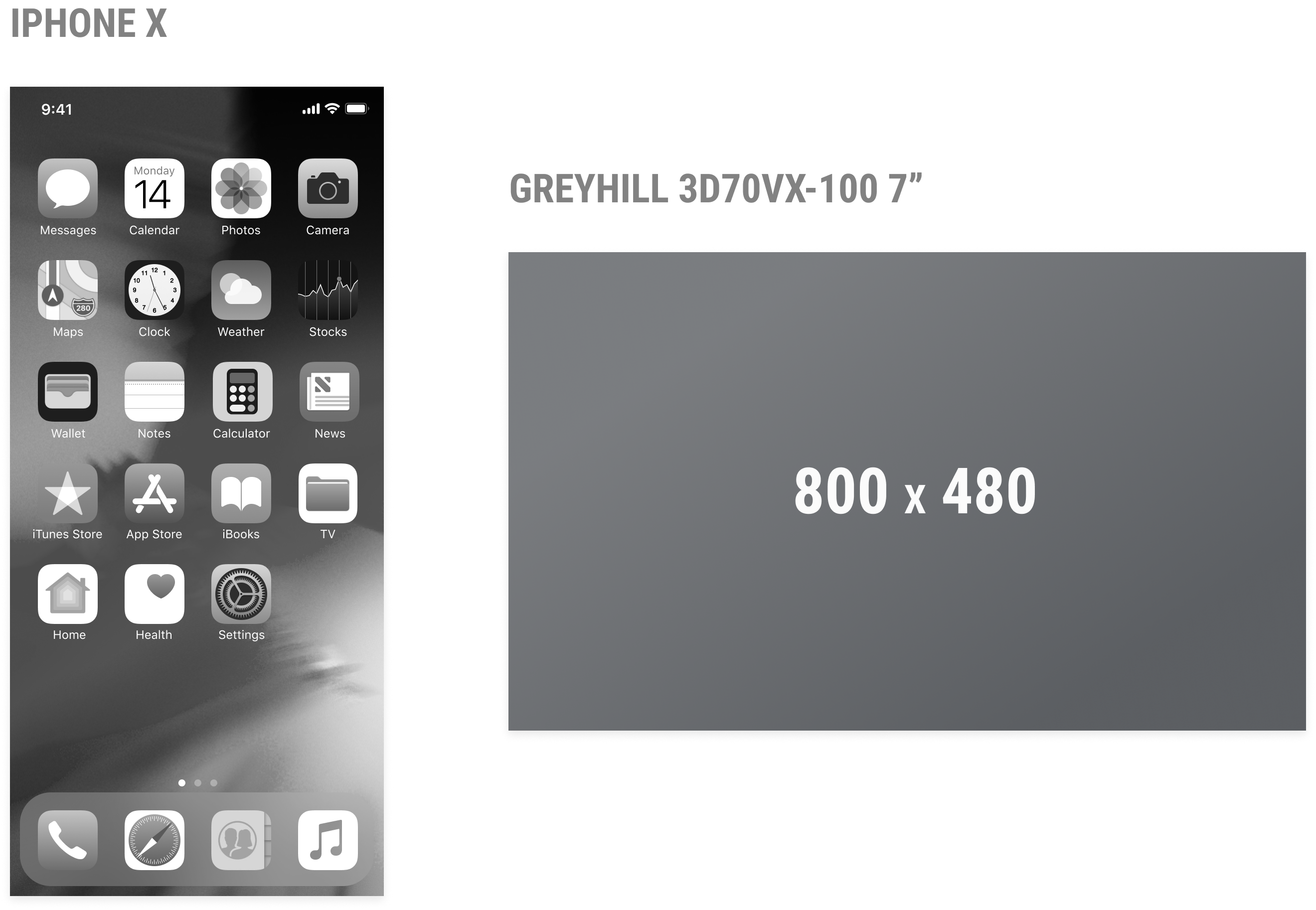
I scoped out all functional requirements to fully understand the system capabilities to design around. I also annotated questions and observations to drive clarification and direction with the client.
User journey
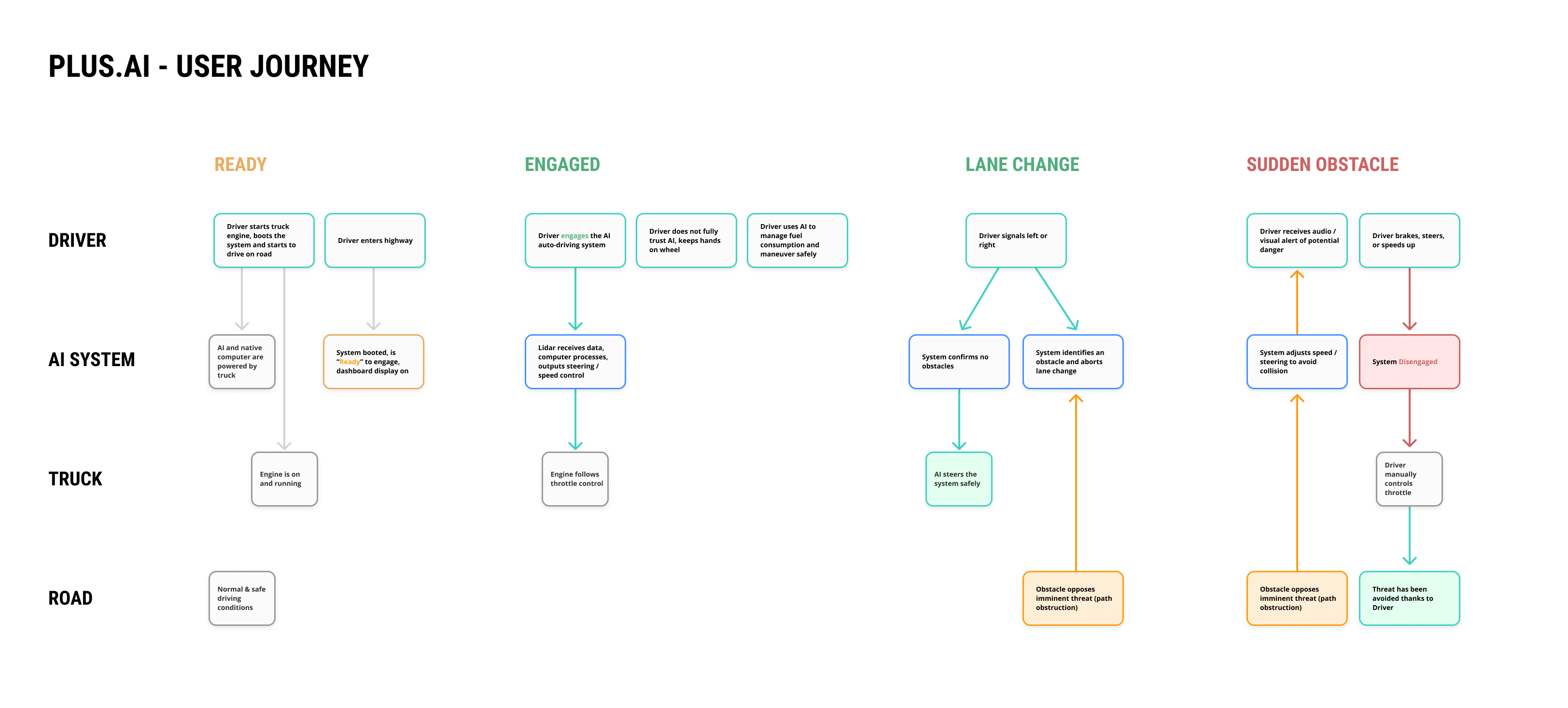
I created a user journey / interaction blueprint hybrid to discover potential user scenarios, edge cases, and problem areas.
Layouts
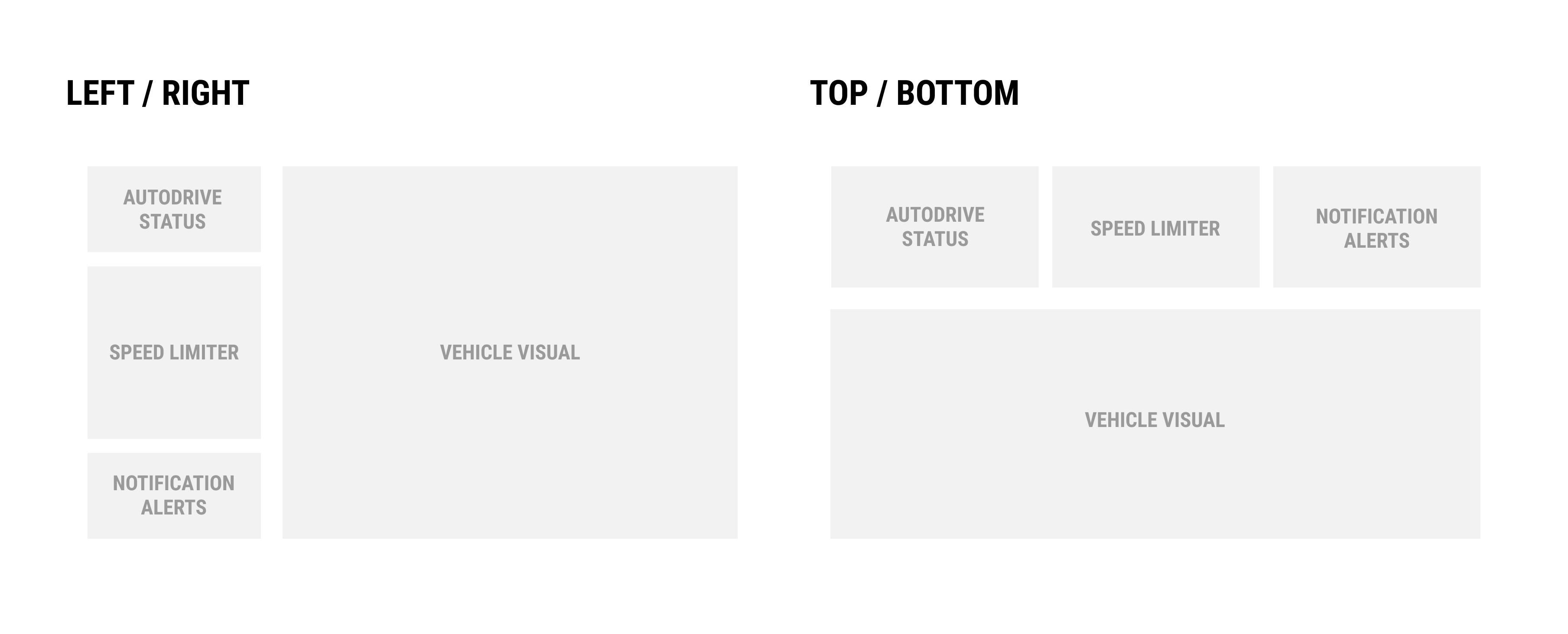
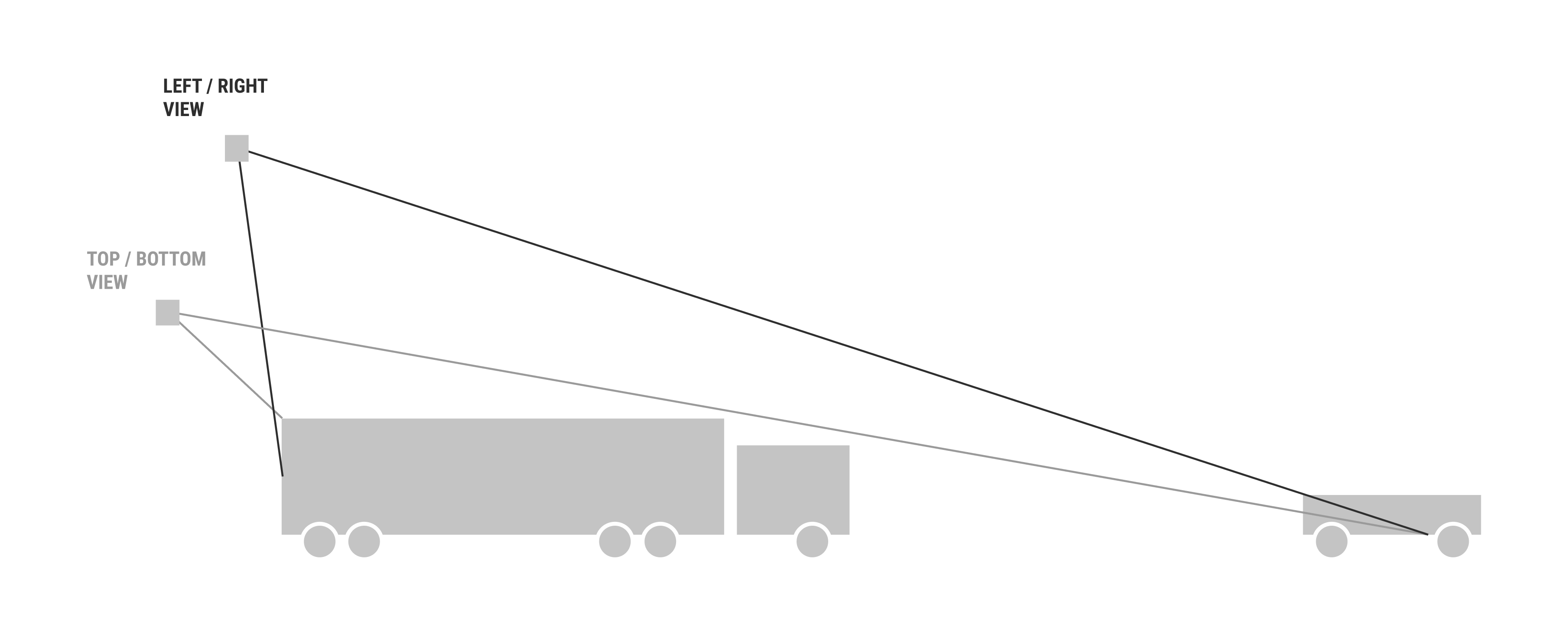
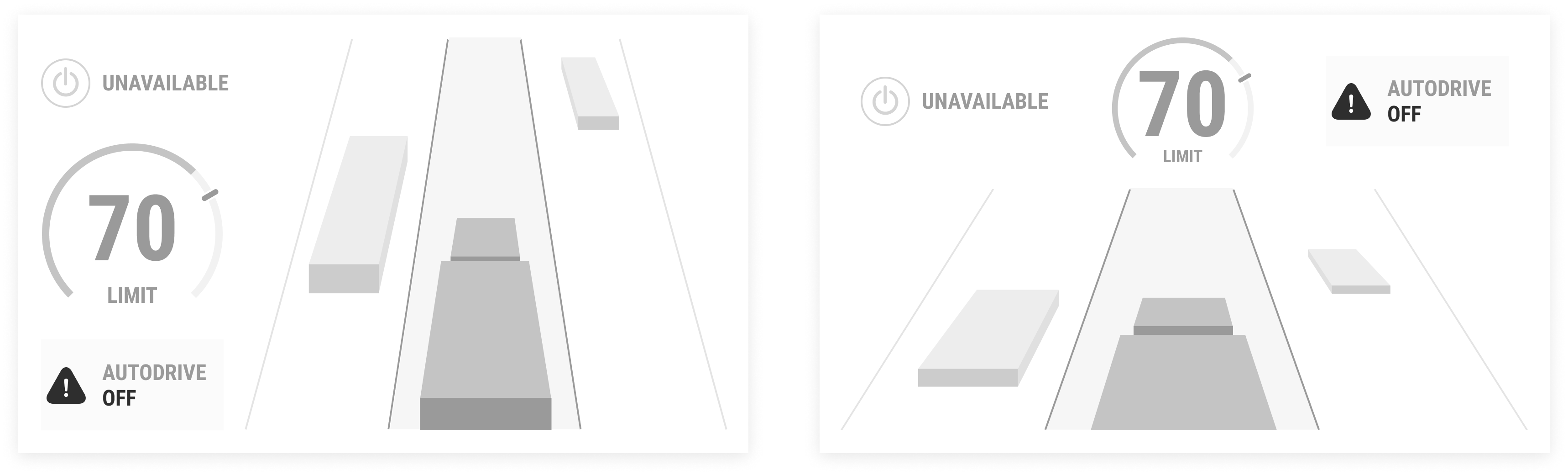
I experimented with super low fidelity layouts to get a sense of screen estate and potential optimization.
The two layouts required different view angles in order to optimize road perspective to frame aspect ratio.
Wireframing
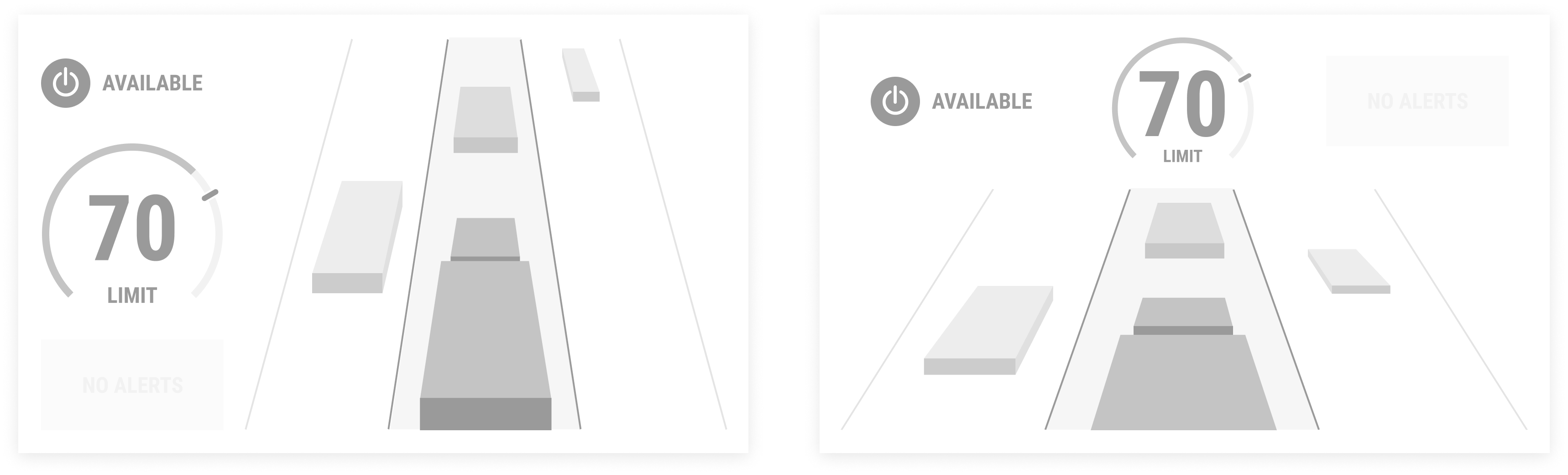
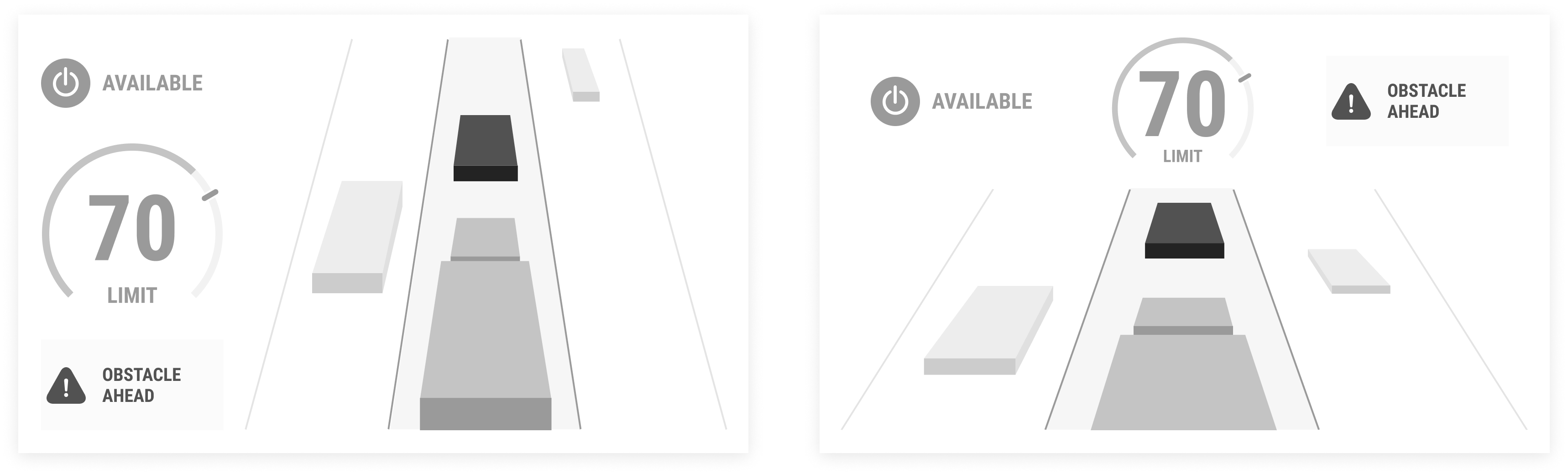
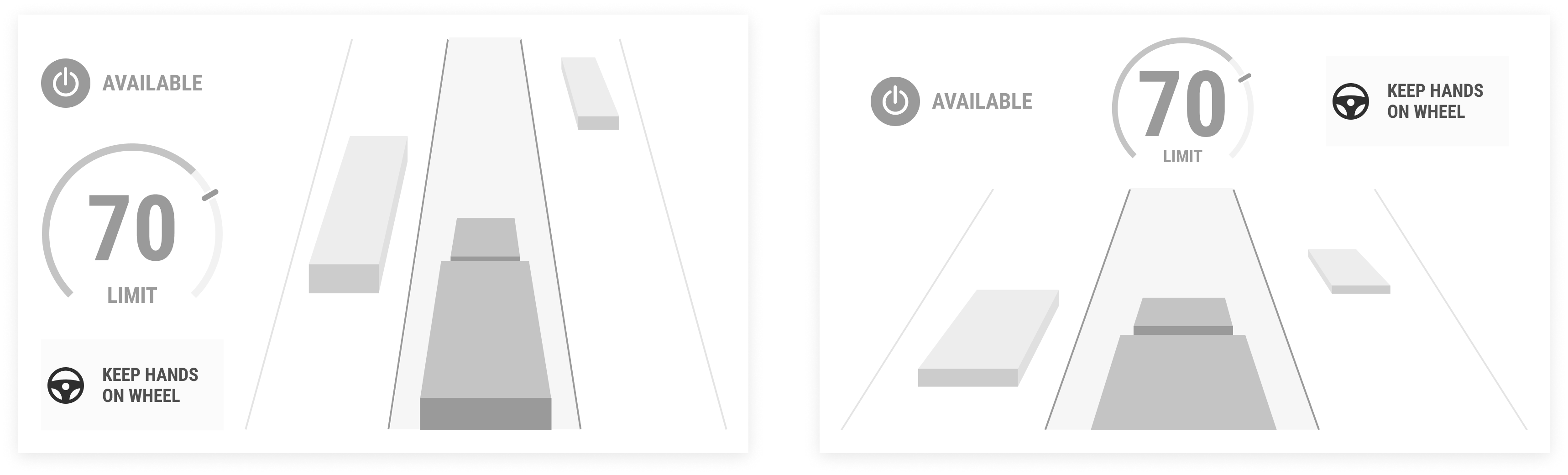
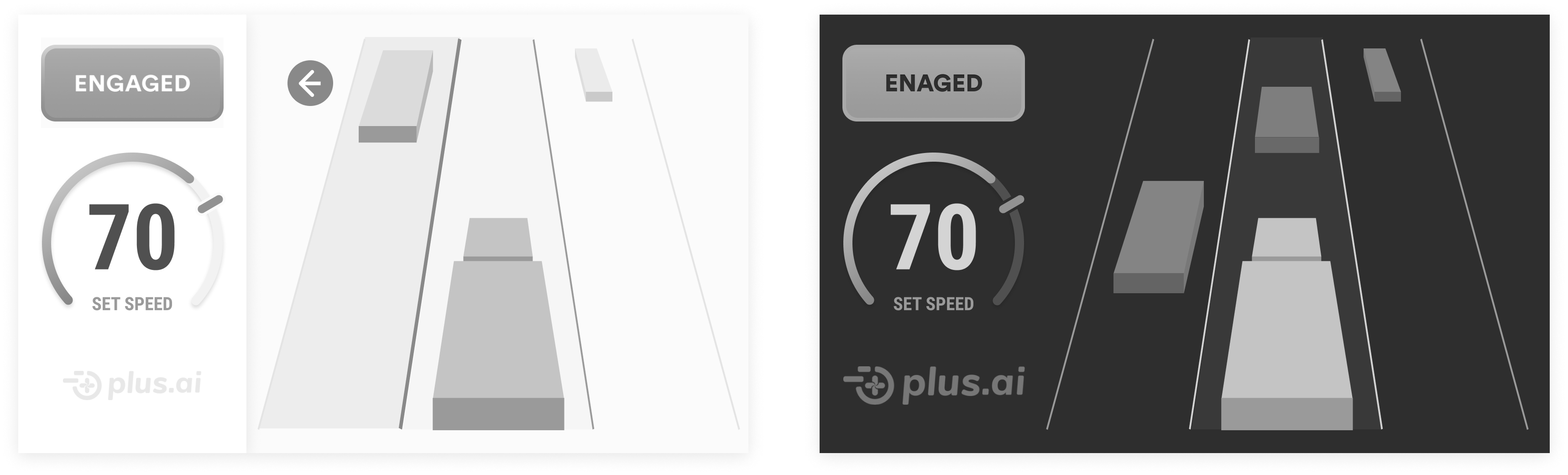
I wireframed dashboard layouts to capture key driver scenarios and system functions. Rapid iterations at low-fidelity allowed for time-effective improvements to the design.
Visuals
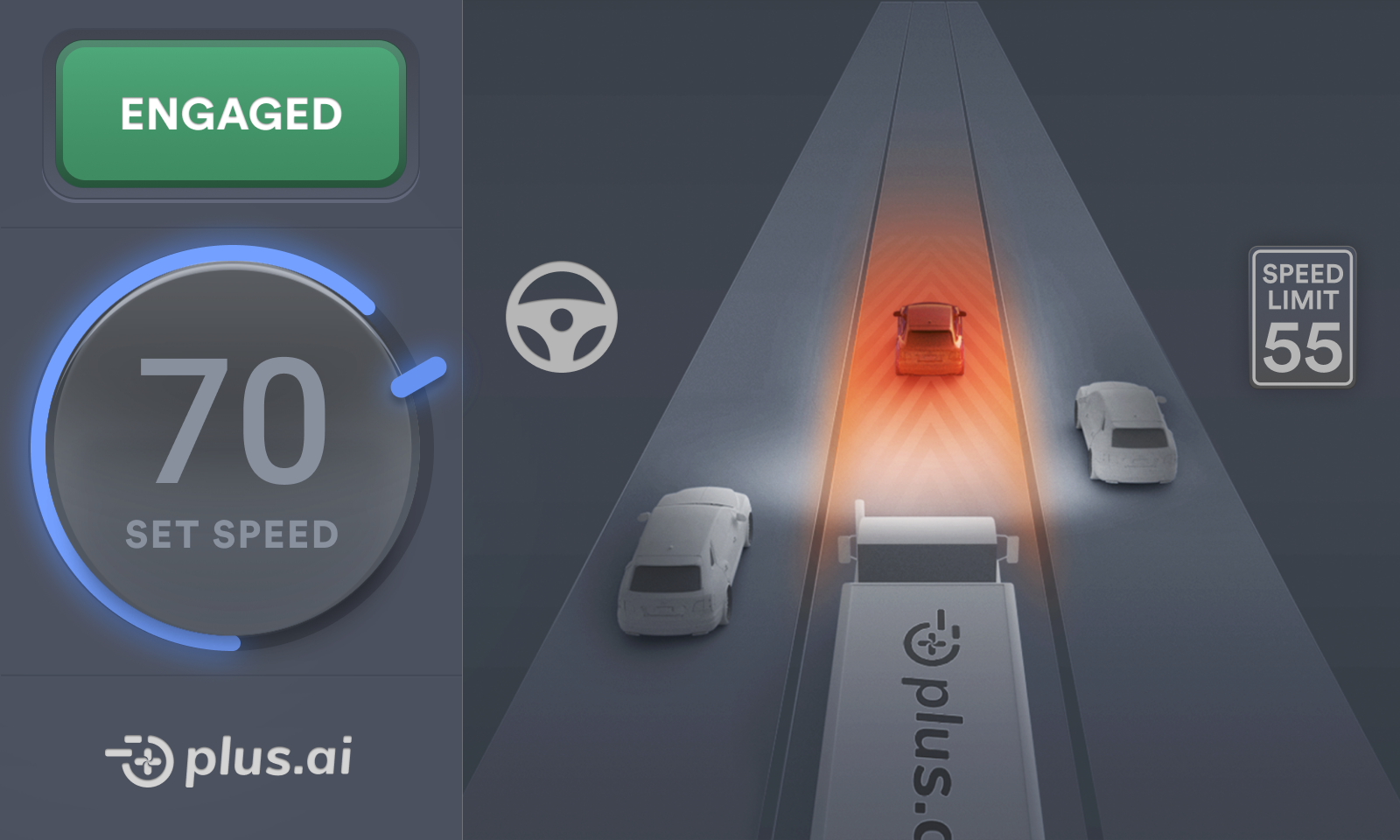
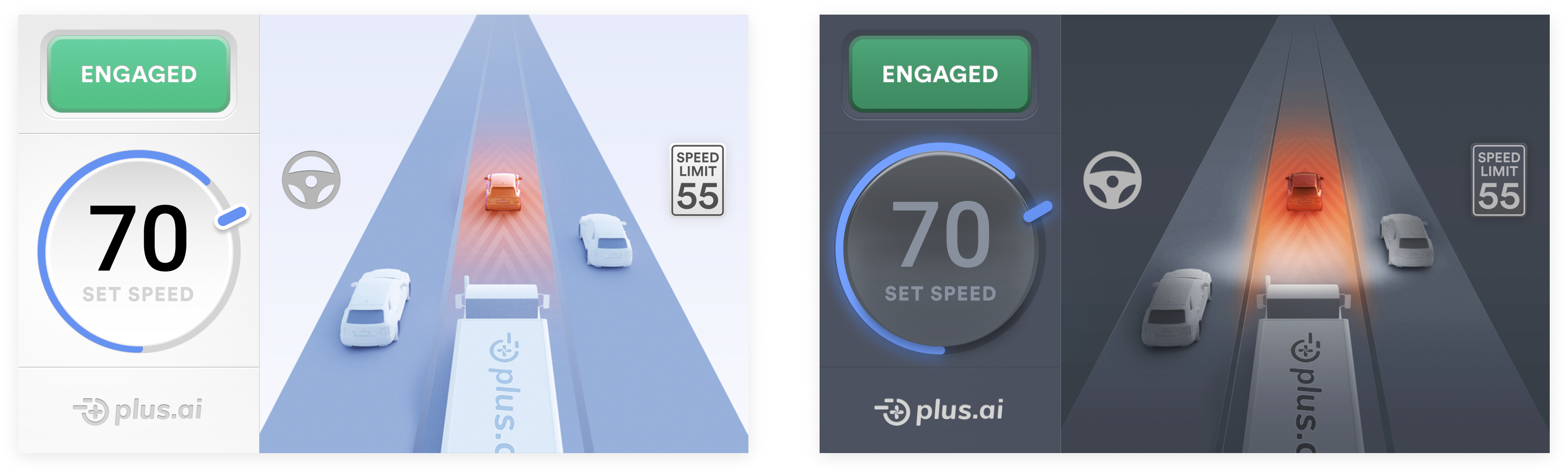
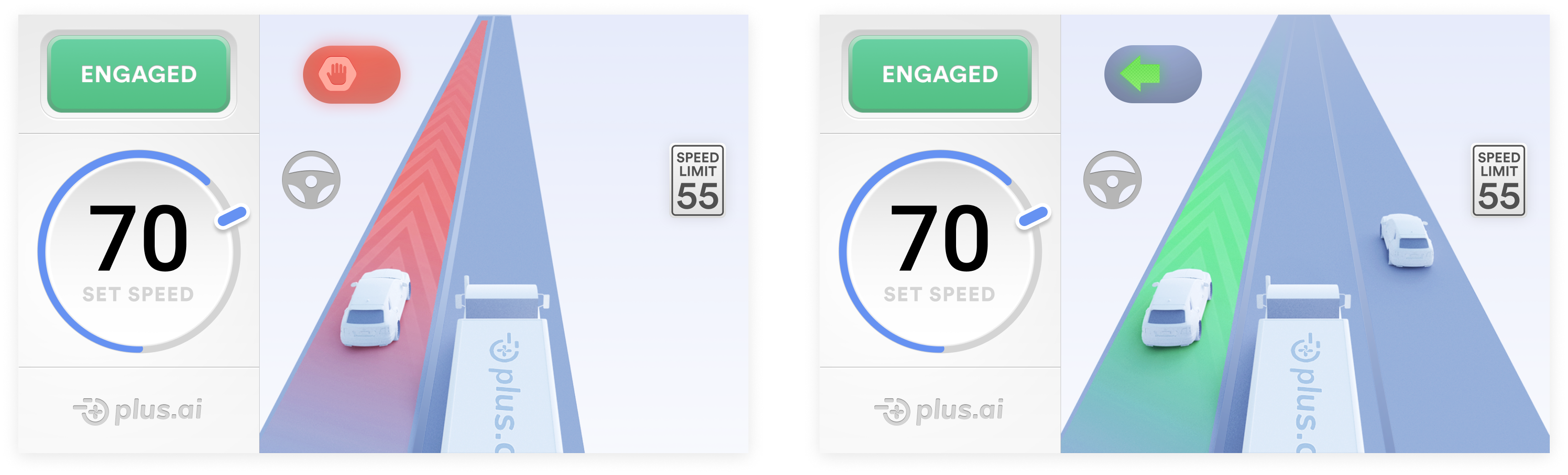
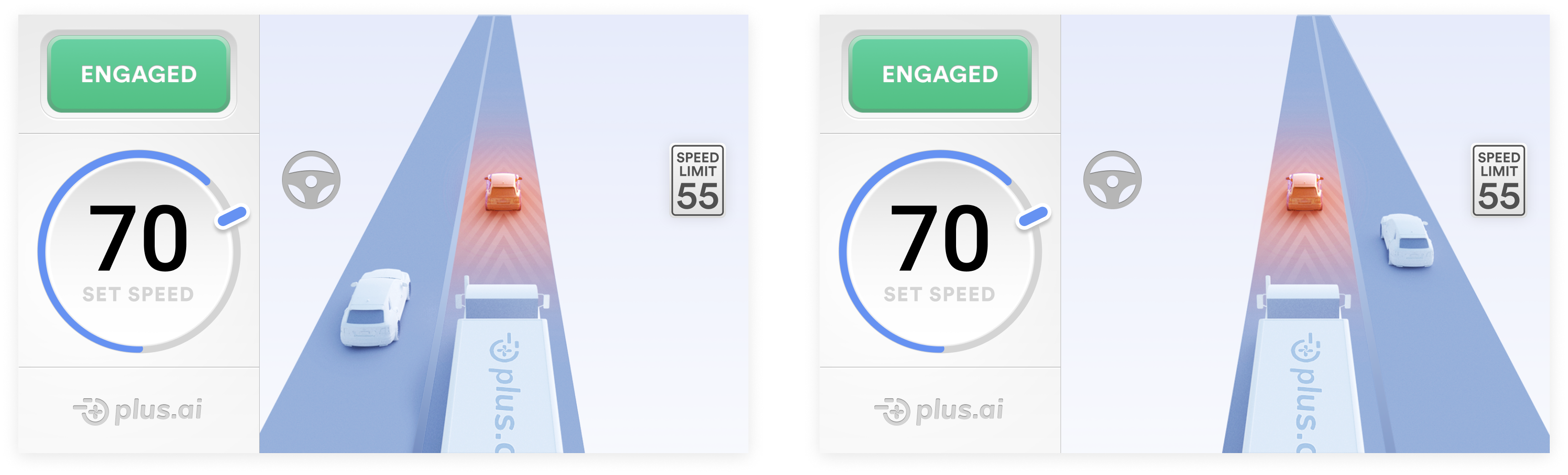
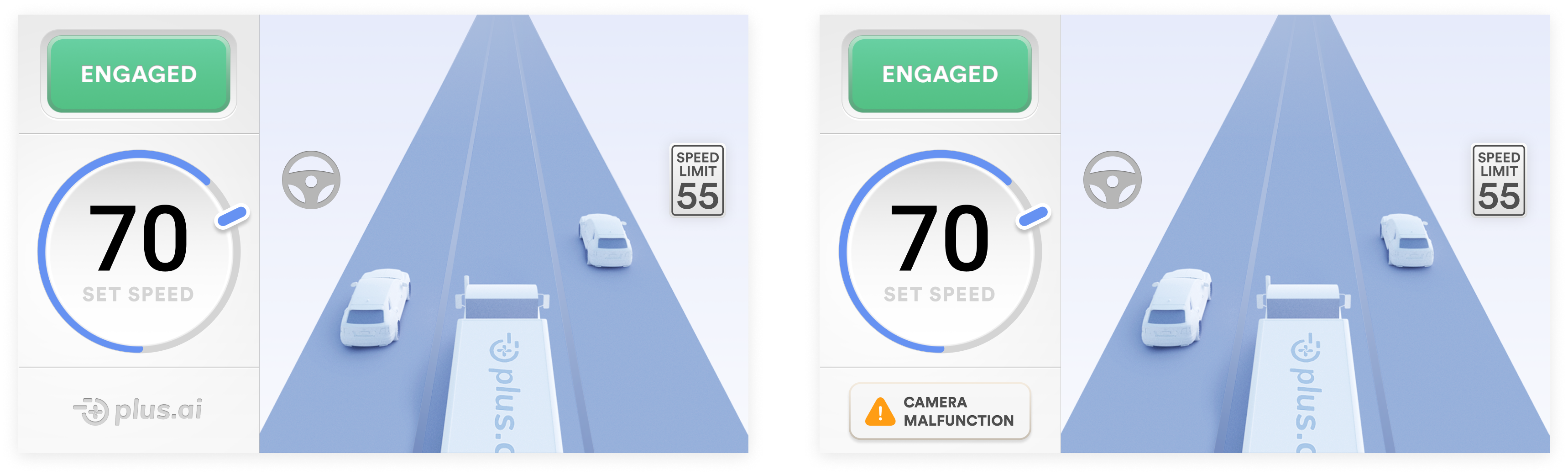
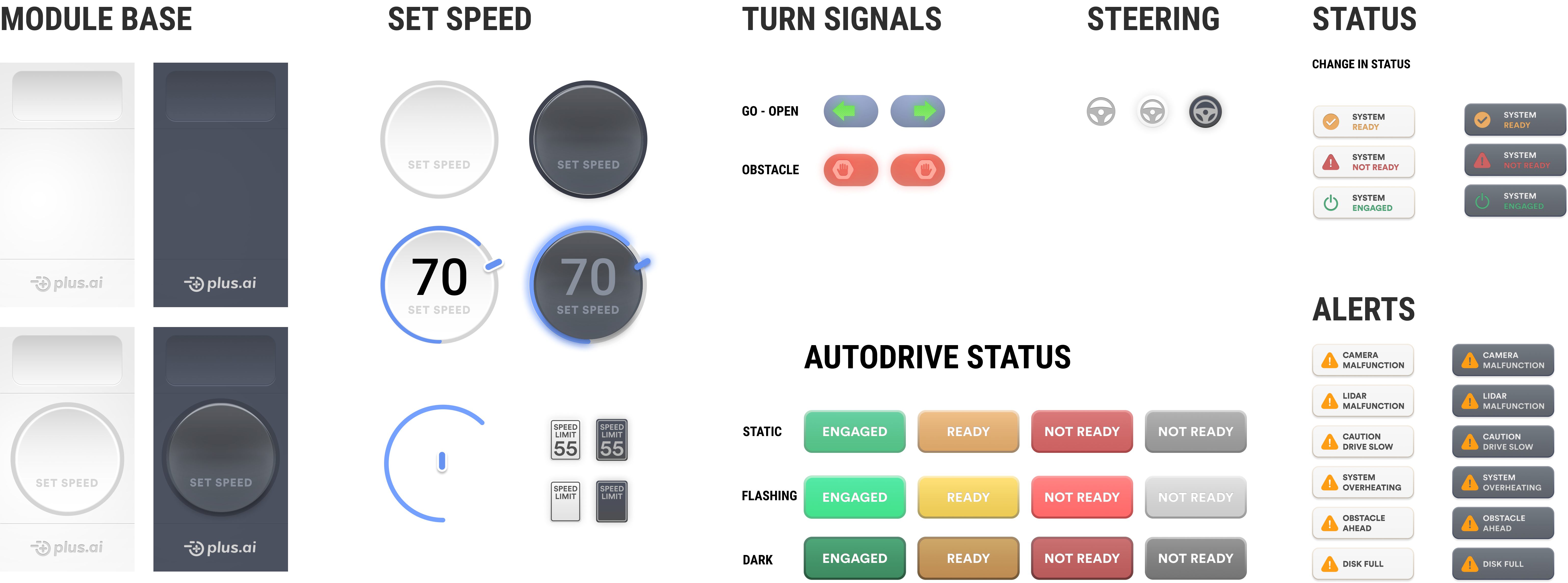
I applied a Neumorphic visual style to complement Plus.ai's modern brand identity. I chose a Neumorphic style to enhance peripheral communication with a sense of futuristic realism.
Results
Successes
- Conducted interviews and test drives to observe interaction behaviors and identify functional requirements first hand.
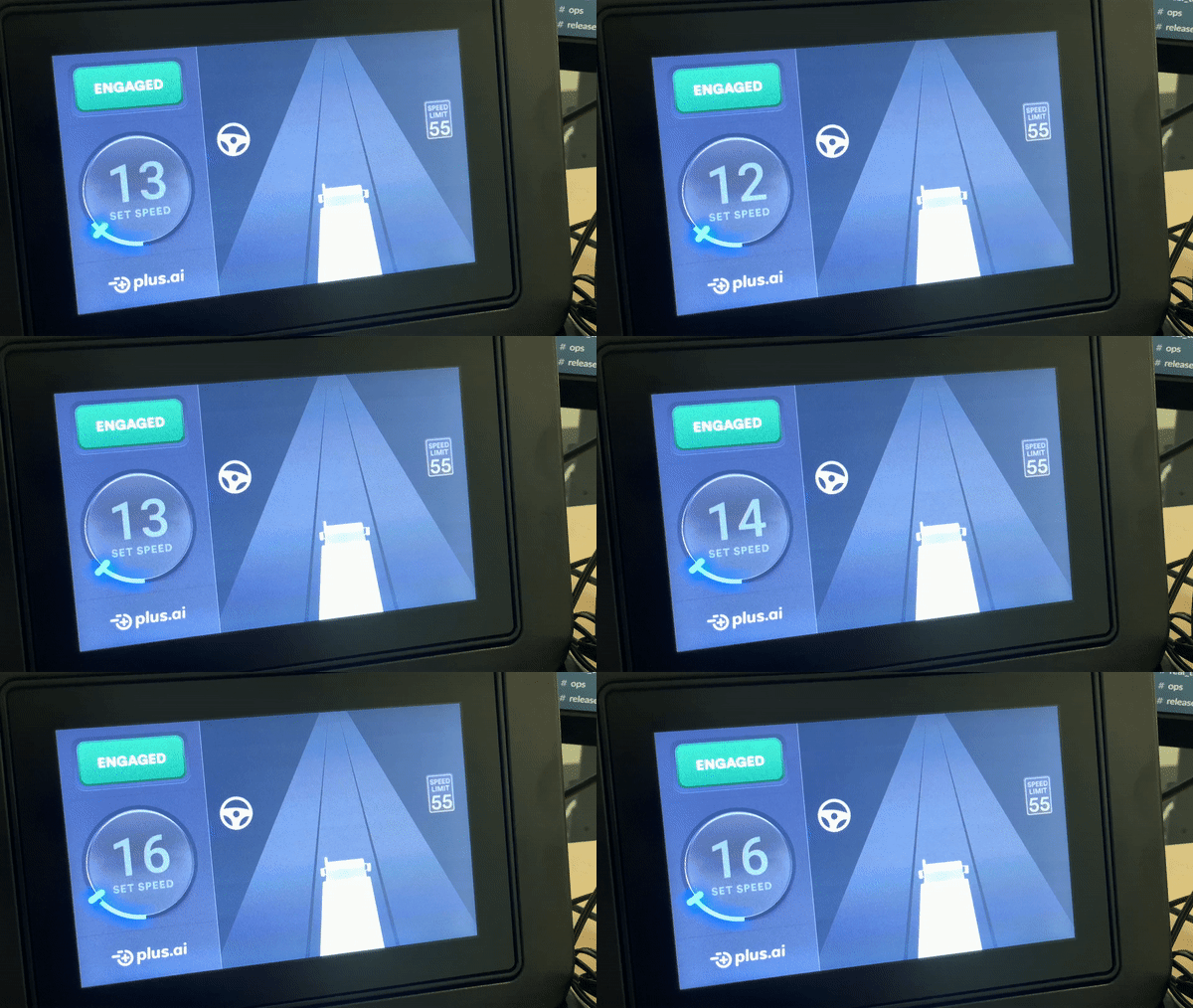
- Designed a dashboard interface optimized for driver peripherals through rapid iteration of user flows, wireframes, and high fidelity components.
Enabled safe and successful operation of an autonomous driving system by visually communicating statuses, alerts, and signals gently yet clearly.
Lessons learned
- Observing user interaction in person exposes needs, behaviors, and pain points much more quickly and earnestly than in any conversation.
- Rapid iteration, multiple options, and quick failure is key to efficiency and decision making.
- Effectiveness, accuracy, and efficiency of product delivery can be consistently produced by following design sprint strategy.
Sam's ClubConsumer, Enterprise, Design Systems
TwitterEnterprise, Design Systems
TeslaEnterprise, Design Systems
Zoe FinancialConsumer, Associate
NxStopStartup
PhotographyPersonal